The Kitchen Degreasing Routine That Actually Keeps Grease From Coming Back
Grease is deceptive. A counter or a pan can look clean right after wiping, only to feel sticky again a few hours later. That's because grease doesn't just sit on top of a surface — it bonds to it, and wiping without the right approach often just moves it around instead of lifting it off.
Why grease "comes back"
What looks like grease reappearing is usually grease that was never fully removed. A dry cloth or a quick rinse can clear the visible layer while leaving a thin film behind — enough to attract dust and re-form that sticky feeling within hours. This is especially true near the stove, where grease is warm and more spreadable at the time of cooking.
Start with dishes, not the counter
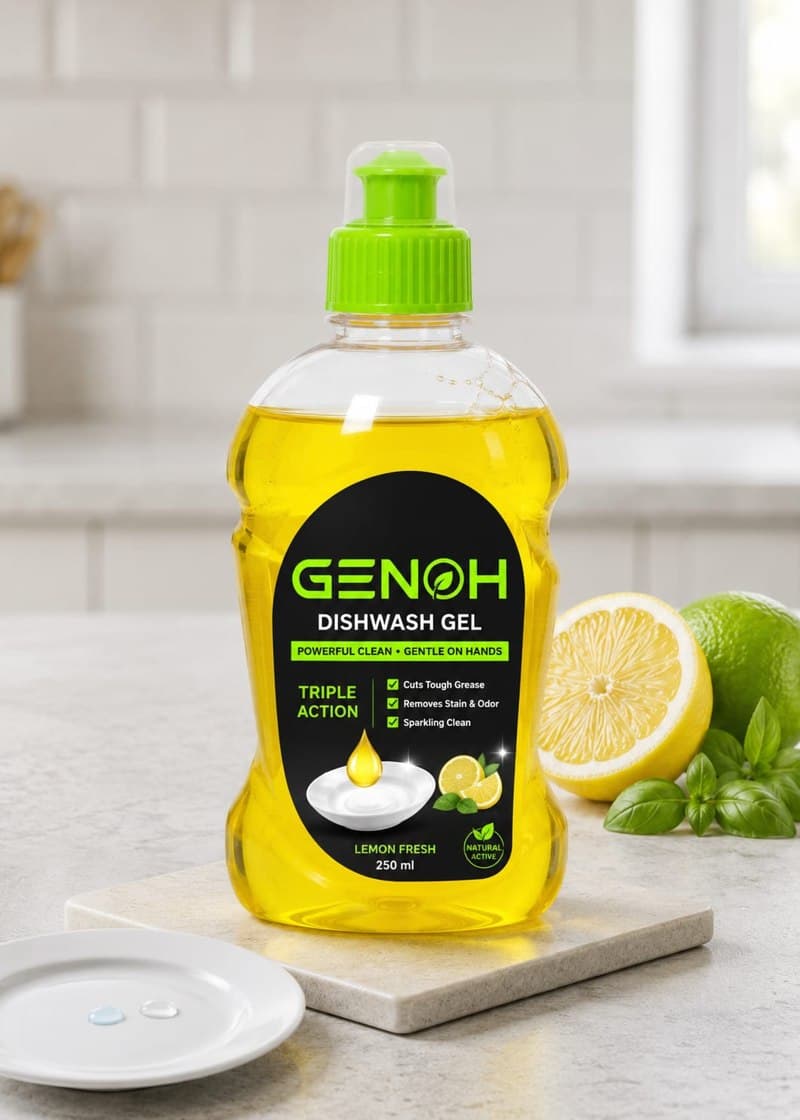
Grease-cutting works best while it's still warm. Scraping food waste into the bin first, then washing pans and dishes while the water is still warm, means the grease hasn't had time to cool and re-harden onto the surface. A lemon-fresh, triple-action gel formula like GENOH's is built to cut through this stage — apply directly to a wet scrub pad, work it into a lather, and rinse thoroughly.
The counter and stovetop need a different approach
Countertops and stovetops accumulate a thinner, more spread-out layer of grease over a whole day of cooking, not a single heavy coating. For these, a light application followed by a proper wipe with a clean cloth — not the same cloth used on dishes — prevents cross-contaminating a "clean" surface with residue from a dirty one.
Grease that's wiped away isn't the same as grease that's actually rinsed off. If it doesn't rinse clean, it's still there.
Don't skip the rinse
This is the step most people shorten under time pressure, and it's the one that matters most. A soapy film left on a plate or pan, even a faint one, dries into a residue that feels gritty or slightly sticky — often mistaken for "still dirty" when it's actually under-rinsed. Rinse until the surface genuinely squeaks, not just until the suds are gone.
A habit that prevents most of the buildup
The single biggest difference between a kitchen that stays grease-free and one that constantly feels sticky isn't the product — it's timing. Washing up soon after cooking, rather than letting pans sit, means grease is dealt with while it's still workable instead of after it's had hours to set.
None of this requires extra products or extra time overall — just doing the wash while things are still warm, rinsing properly, and keeping dish cloths separate from counter cloths. The stickiness that seems to "come back" mostly just never actually left.
Ready to see the product behind these tips?
View Products